Search and agents over your own documentation
Almost every company with a few years behind it has a large archive: minutes, contracts, reports, transcripts, technical documentation. And almost none of them consult it, because consulting it means someone remembering where that thing was and searching by hand. The knowledge exists, it's paid for, and it goes unused.
The search built into the document manager doesn't fix that: it finds the words you type, and the person asking rarely knows which words the answer was written with three years ago.
Two cases, and the decision behind them
A company was receiving dozens of documents by email every day and needed to classify them into a taxonomy of 77 subcategories. The natural move would have been to train a classifier; it wasn't done, and that decision is what underpins the result: the full story is here. Each category is represented by two anchors —its examples and its written definition— and classifying becomes measuring distances, not retraining.
What you gain is not just accuracy: when the taxonomy changes —and it does change— there is nothing to retrain. The prototypes are regenerated in minutes. The cost leaves the setup phase and disappears from maintenance, which is where these projects usually die.
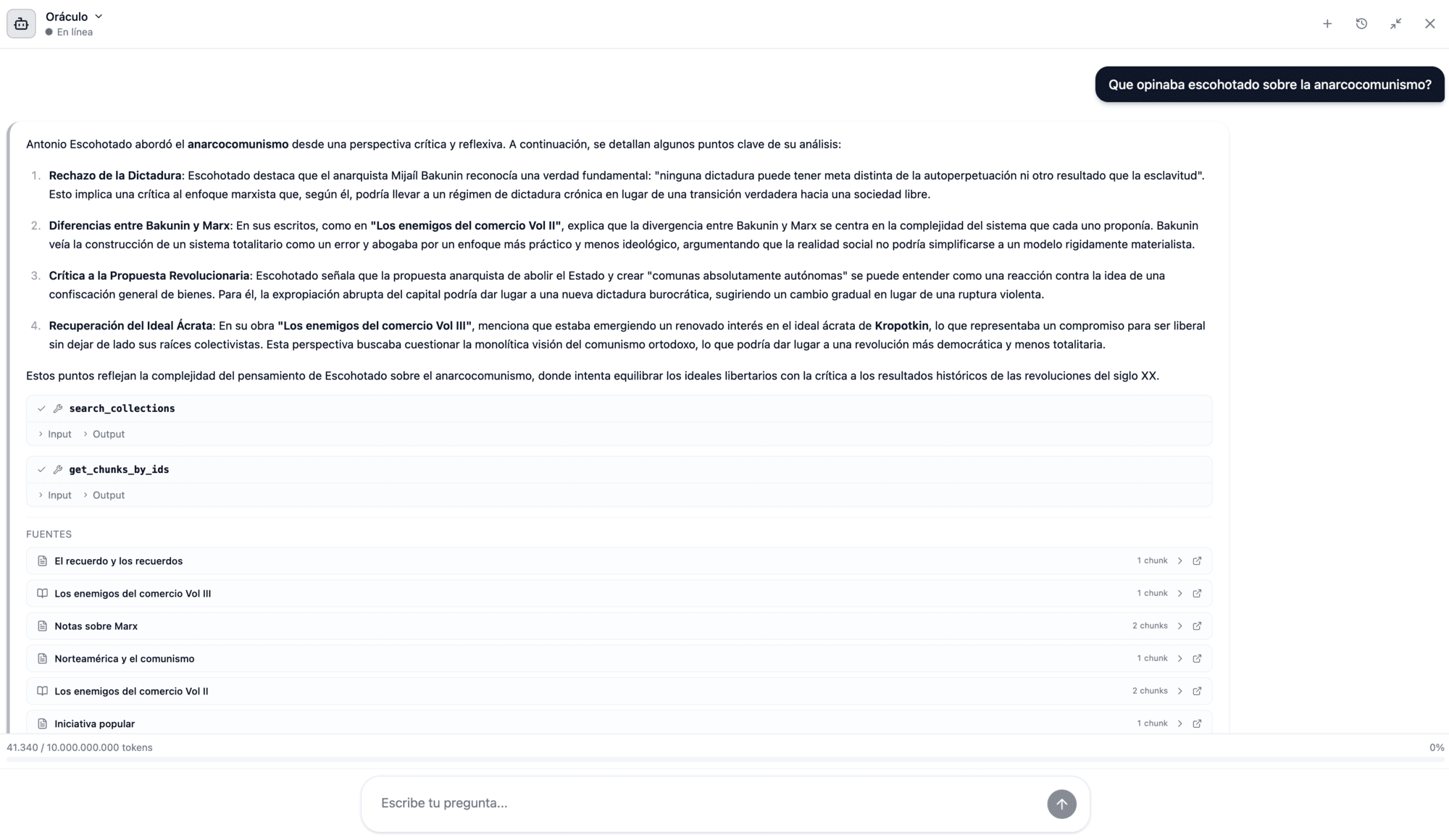
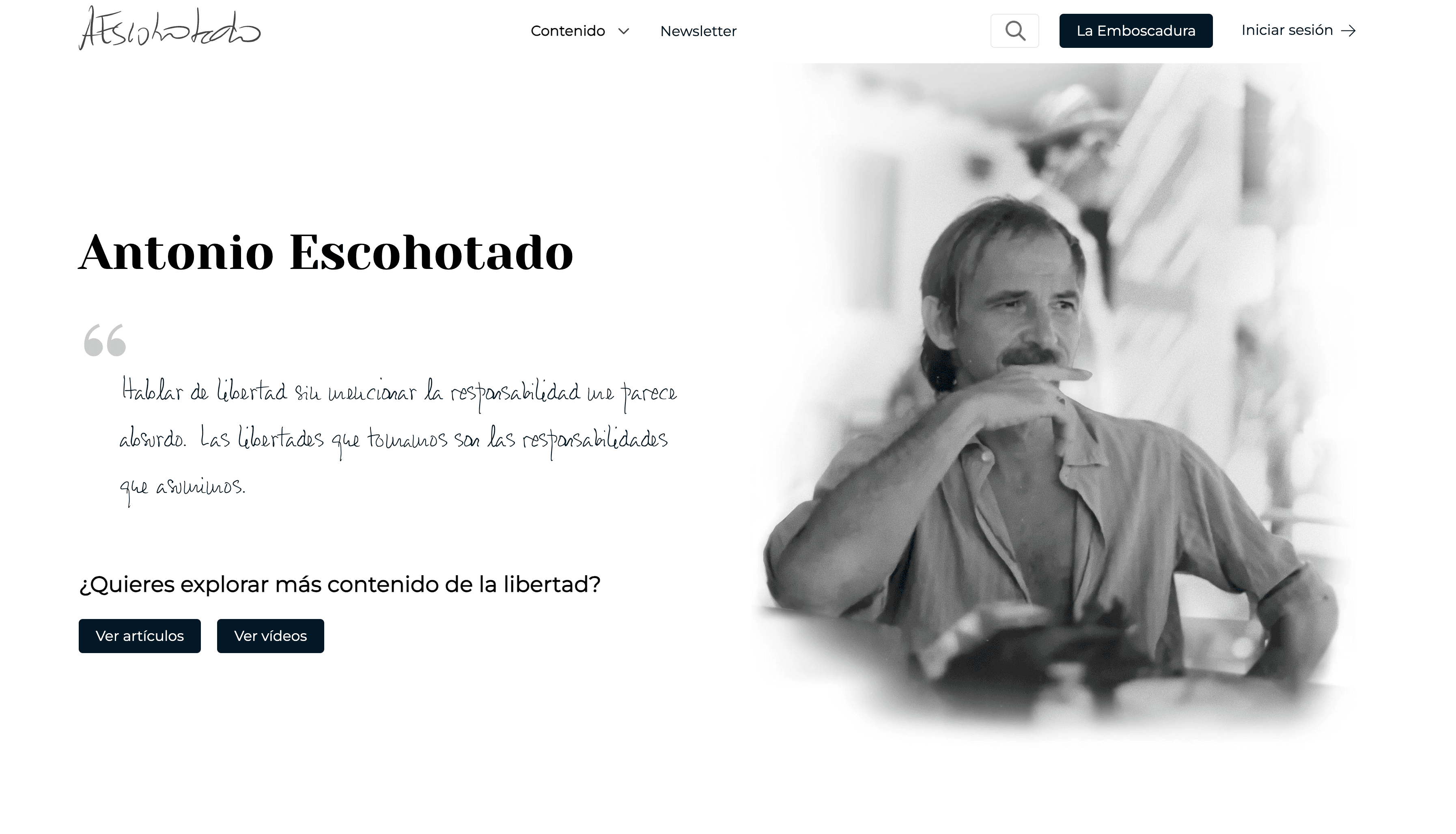
On a different corpus, the public archive of an author with thousands of fragments, the result is an agent you ask in plain language and that answers citing where each thing comes from: the legacy of Antonio Escohotado, explorable with AI.
What gets built
A retrieval system over your content and, on top of it, an agent that uses it. In order:
| Piece | What it's for |
|---|---|
| Ingestion and chunking | Turning long documents into fragments a search engine can handle without losing track of what they are about |
| Hybrid search | Finding by concept when you don't know the exact word, and by exact word when you do |
| Agent with tools | So it queries your content instead of improvising, and cites the source of every claim |
| Per-user scope | So each person sees only the corpus they are entitled to, with the limit enforced on the server |
| Human correction | So an expert can fix a result and that correction is stored and feeds the next version |
What separates this from "setting up a RAG"
Setting up semantic search takes an afternoon. Having it still working a year later with real content is another matter, and that is where you can tell whether whoever built it had hit the problem before.
A concrete example: in high-dimensional spaces there are vectors that come out as neighbors of almost everything. Left uncorrected, generic categories always win and the specific stops appearing, with no one getting an error. It is a silent failure, it is in half the implementations out there, and I explain it in detail in the agentic RAG post.
The same goes for scope: a search engine without access control is a security problem with good documentation. Retrieval profiles must bound on the server what each agent can read, and the filters arriving with each query should only be able to narrow that scope, never widen it.
How I work
I start with the corpus, not the model. The first conversation is about what documents exist, in what state, who asks, and what decisions depend on the answer. From that comes whether the problem is solved with search, with classification, with an agent, or with none of the three.
Then, a bounded trial on your real content —not on a demo— to see the accuracy it delivers before committing to anything. And if it moves forward, it gets deployed wherever you say: in your cloud or on your own infrastructure, because with corpora holding sensitive documentation that is usually the question that decides the project.
When it is not worth it
If the archive is four folders and the person consulting them already knows where everything is, this is infrastructure for a problem you don't have.
And if the documents are not digitized or are a chaos of duplicates and versions, that is the first job, not the AI. I'd rather say so on the first call than discover it halfway through the project.
Who it's for
For organizations with an archive that already supports decisions —law firms, engineering firms, government bodies, product teams with years of documentation— and that now depend on someone remembering where that thing was. And for teams that want an agent over their knowledge but need it to answer with sources and respecting who can see what.
Proof of exactly this

Classifying documents into 77 categories without training a model
Antonio Escohotado's legacy, explorable with AI
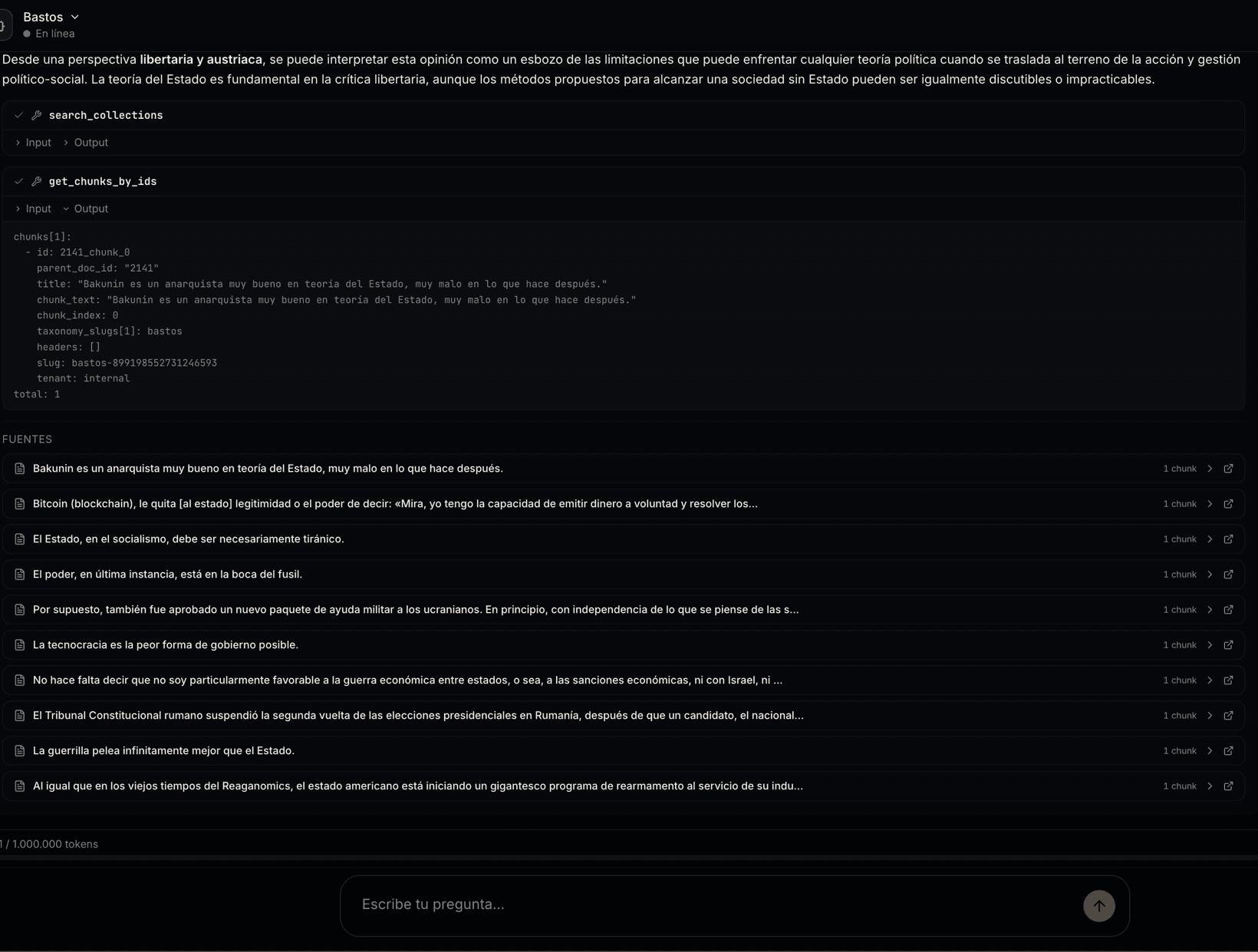
An agentic RAG served as thirteen MCP tools
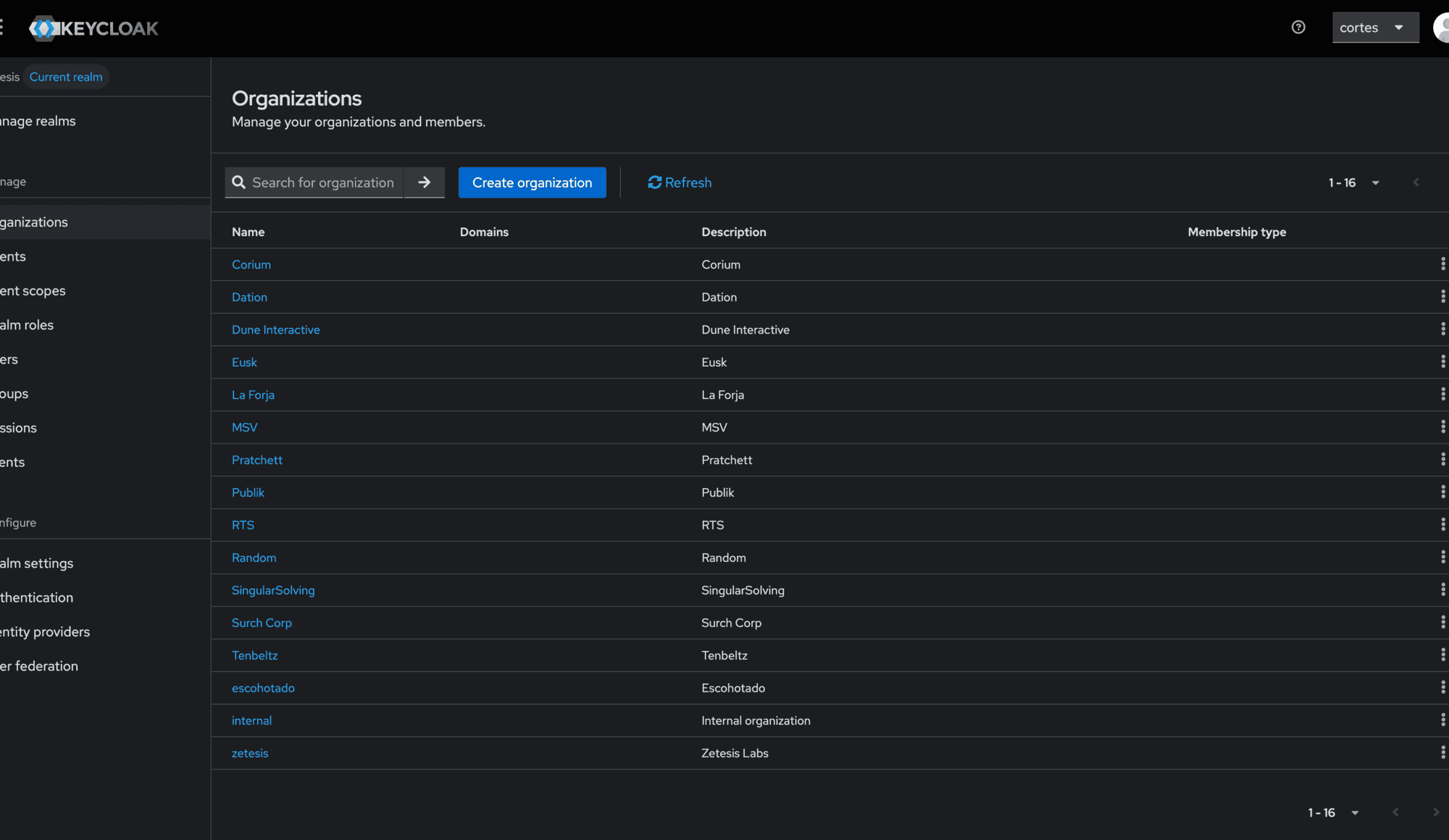
One deployment per customer or one space per customer
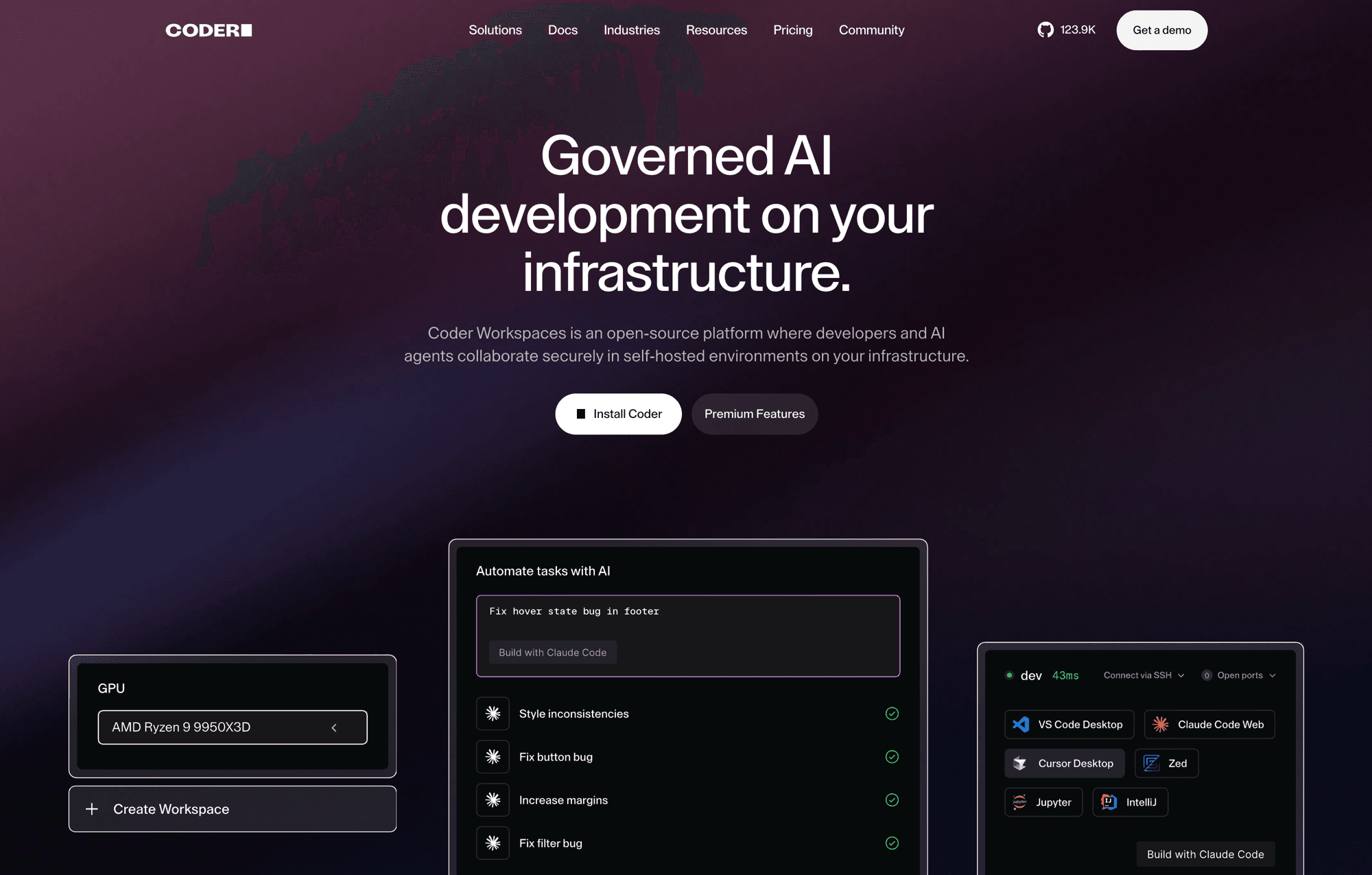
Coder: remote development environments with devcontainers for the whole team
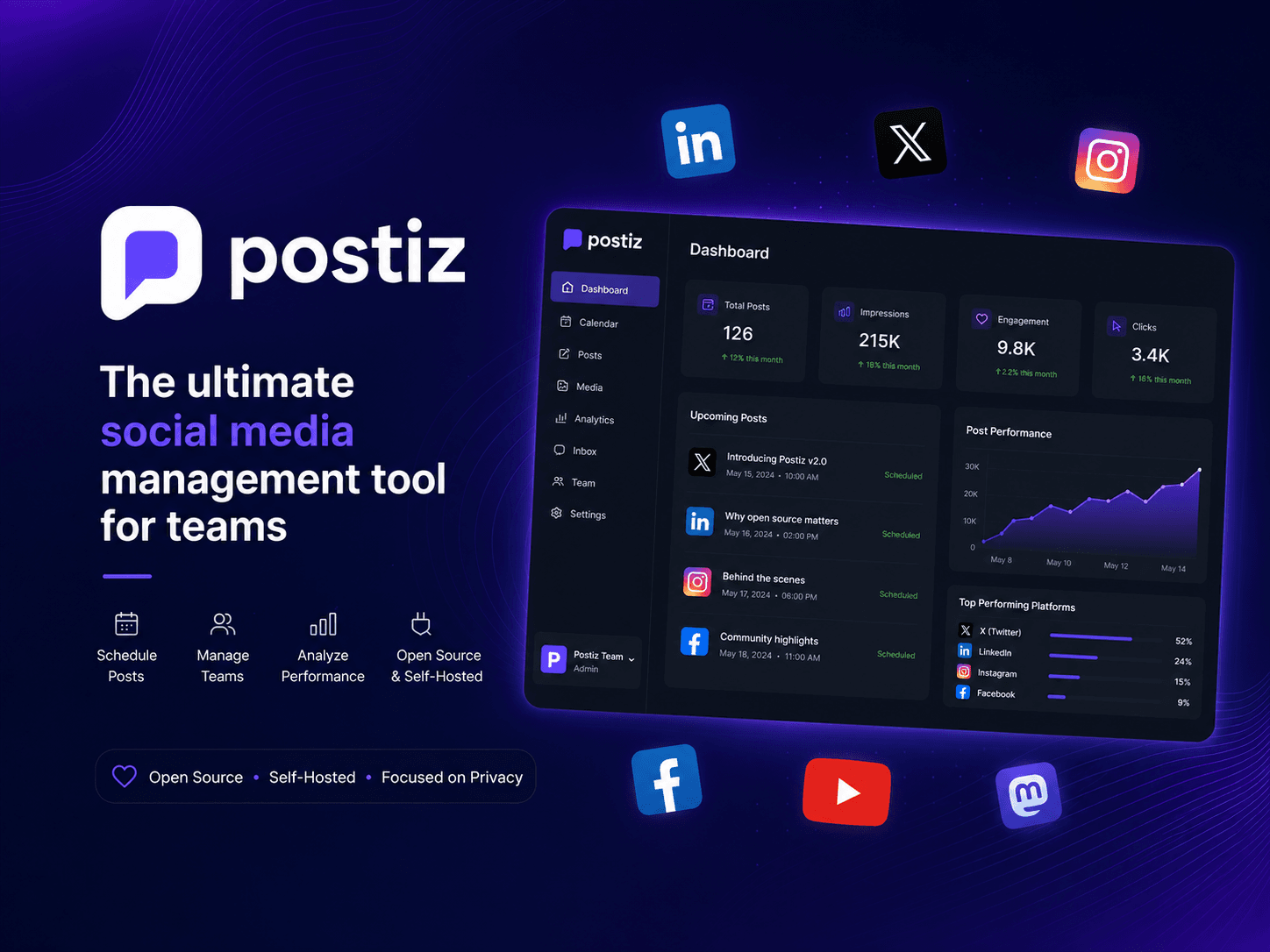
Postiz: scheduling social media posts from your own server
Let's talk
If you have an archive no one consults because you can't ask it anything, tell me what it contains and who would need to ask it. One conversation is enough to see whether there is a case.